TMS Therapy For Depression

You’ve tried antidepressants. Maybe two or three. The side effects were brutal, or they just didn’t touch the fog, the fatigue, the flatness. You’re still showing up, but the relief hasn’t.

That’s where transcranial magnetic stimulation (TMS) therapy fits. It doesn’t work like a pill. It works like a reset for the part of your brain that’s gone quiet. As a proven mental health treatment and mood disorder treatment, NeuroStar TMS therapy is an FDA-cleared, non-invasive severe depression treatment specifically designed for those who haven’t found relief with medication.

83%

of patients who complete a full NeuroStar treatment cycle show measurable improvement in depression symptoms

Decorative divider line

62%

achieve full remission, meaning they
likely wouldn't be diagnosed with MDD if re-evaluated

Decorative divider line

19–37 minutes

per session, 5 days a week, for 4 to 6 weeks

Decorative divider line

FDA-cleared

for treatment-resistant depression in adults since 2008

Who TMS Is For

You don’t need to have failed every medication. The typical candidate for TMS has tried at least one antidepressant at an adequate dose and duration without getting meaningful relief, or could not tolerate the systemic side effects.

The STAR*D study, the largest clinical trial of Major Depressive Disorder (MDD) ever conducted found that first-line antidepressants are only 27.5% effective at achieving remission. Treatment resistance causes your chance for remission to decrease with each subsequent medication attempt. After three or more antidepressants fail, the chance of remission from another medication trial drops below 7%.

TMS is a specialized psychiatric treatment and mental health treatment FDA-cleared specifically for hard-to-treat depression (also known as treatment-resistant depression). It’s not a first-line treatment for mild depression. It’s what comes next when standard care isn’t enough: a proven severe depression treatment that works when medications don’t.

Book TMS Therapy in Jacksonville

Symptoms of Depression: What to Look For

Depression isn’t just sadness. It lives in your body, your schedule, your ability to finish a thought.

Symptom Domain

Low mood

Loss of interest

Fatigue

Poor concentration

Brain fog

Motivation issues

Emotional numbness

Hopelessness

Sleep problems

Anxiety and depression

Common Impact

Feeling hollow, heavy, or nothing at all not just “down”

Hobbies, sex, seeing friends things you used to chase now feel pointless

Waking up exhausted after 10 hours of sleep

Reading the same paragraph four times

Thinking feels like wading through cement

Knowing you should but you can’t make your body start

You don’t cry. You don’t get angry. You don’t laugh. You just don’t feel

The quiet belief that nothing will ever feel different

Can’t fall asleep, can’t stay asleep, or sleeping 12+ hours

Racing thoughts and no energy to act on them

TMS Therapy for Depression vs. Antidepressants and ECT: How They Compare

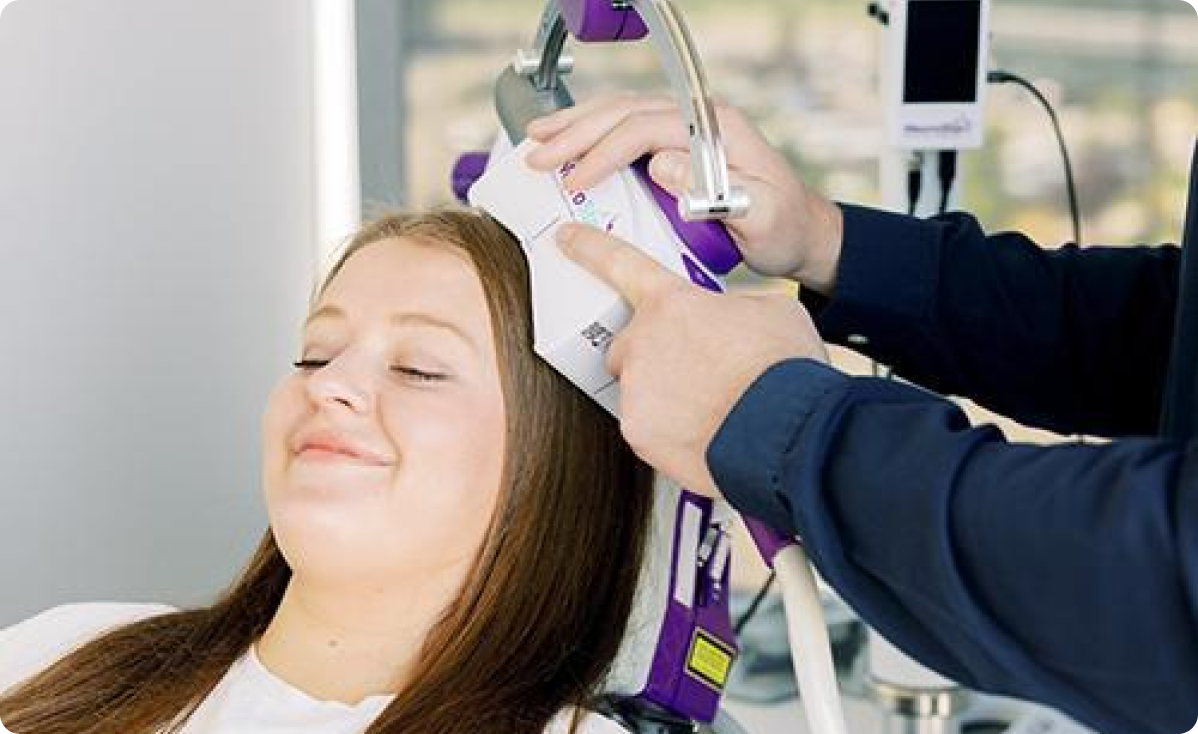
Forget what you know about brain stimulation from movies. A magnetic coil treatment sits gently against your scalp, just above your left temple.  It delivers focused, MRI-strength scalp magnetic pulses that pass through your skull without pain or incision.  Those pulses target specific areas of the brain associated with mood regulation.
Unlike antidepressants, no medication enters your bloodstream, preventing systemic side effects like weight gain or sexual dysfunction. Unlike ECT, TMS is non-invasive, requires no anesthesia, and does not cause seizures or memory loss. You remain fully awake and can drive yourself home after every session.
Here’s how TMS stacks up against the alternatives:

Feature

Works by

Systemic side effects

Anesthesia

Treatment schedule

Driving afterward

TMS Therapy

Magnetic pulses

None

No

5 days/week, 4 to 6 weeks

Yes

Antidepressants

Chemical alteration

Weight gain, sexual dysfunction

No

Daily pill, indefinite

Yes

ECT

Controlled seizure

Memory loss, confusion

Yes

2–3 times/week

No

Why TMS over antidepressants:

If you’ve already tried multiple antidepressants, your chance of remission from another medication is less than 7%. TMS offers a completely different mechanism.

Why TMS over ECT:

ECT works, but it requires anesthesia and causes memory loss. TMS offers a non-sedating, memory-safe alternative.

Learn About The Conditions Treated By TMS Therapy

What to Expect During TMS Therapy for Treatment-Resistant Depression

A full course requires commitment. Five days a week for 4 to 6 weeks. Here’s what happens:

Step 1:

Free TMS Education

You meet with patient coordinator Valeria Alana to discuss your history and whether TMS might be right for you.

Decorative divider line

Step 2:

Psychiatric Evaluation

Dr. Sarah Boaz or Victoria Kozel, DNP reviews your medication history and confirms eligibility.

Decorative divider line

Step 3:

Motor threshold mapping + First Treatment.

About 90 minutes. The TMS treater finds the exact pulse strength needed for your brain. Your first visit takes about 90 minutes total. This includes:

  • Clinical setup and motor threshold mapping (~20–30 minutes) to find the exact pulse strength needed for your brain
  • Your first full TMS treatment session.

Step 4:

Daily Sessions

19–37 minutes each. You sit in a recliner, awake the whole time. Watch Netflix or listen to a podcast.

Step 5 :

Return to Normal Activity 

No downtime. Drive yourself home. Go back to work or school.

Most people notice changes around week 3 or 4. Not a sudden shift. More like realizing one day that you had more energy, or you didn’t feel hopeless when you woke up.

Contact Us For Free TMS Consultation

TMS for Depression: Clinical Evidence, Response Rates, and Safety

NeuroStar maintains the world’s largest depression outcomes registry with data on over 17,700 patients since 2016.

For adults with treatment-resistant depression:

A real-world study of patients across 118 practice sites reported an 83% response rate and 62% remission rate among those who completed treatment, as measured by clinician rating (CGI-S) (1) making TMS one of the most effective treatment success options for hard-to-treat depression  (1)

For adolescents aged 15–21:

A study of 1,283 patients published in JAACAP Open (2025) found approximately 70% reported clinically meaningful improvement, with less than 1% reporting worsening, as measured by the PHQ-9 (2)

Safety:

Over 7.1 million TMS treatments have been performed to date. The most common side effects are mild scalp discomfort or temporary headache during the first week. Seizure is a rare but known risk. No weight gain, no sexual dysfunction, no memory loss unlike traditional antidepressants and ECT

Recovery Support and Long-Term Outcomes

Beyond the initial treatment course, FitMind provides ongoing recovery support to help you maintain your progress. Your psychiatrist will work with you to develop a personalized maintenance plan that may include periodic booster sessions to prevent relapse.

Frequently Asked Questions About TMS Therapy for Depression

How long do the results of TMS therapy last for depression?

This is one of the most common questions patients ask. The durability of TMS results varies by individual. Research shows that 66.5% of initial responders maintain their response at three months, decreasing to about 46.2% by the end of one year. The average time to relapse is approximately ten months without maintenance treatment.

The good news: Maintenance TMS periodic booster sessions after your initial course, can significantly extend these results. Some patients achieve sustained remission for over a year and a half with maintenance protocols. Your psychiatrist will help you develop an individualized maintenance plan based on your response to the initial treatment and your specific risk factors for relapse.

This is a real concern, and honest answers matter. While TMS does not cause long-term worsening of depression, some patients experience a temporary phenomenon often called the “TMS dip”. During the first week or two of treatment, you might feel emotionally unsettled or even more depressed for a short period.

This is not permanent and typically resolves as treatment progresses. Most patients notice improvement starting around weeks 3 or 4. If you experience a significant mood drop, your provider should be notified immediately, they can adjust your treatment plan or offer additional support. It’s also worth noting that TMS may worsen symptoms in patients with conditions TMS is not designed to treat, such as schizophrenia or bipolar disorder, which is why proper screening is essential

Yes, in terms of systemic side effects. TMS does not enter your bloodstream, so it avoids the systemic side effects common with antidepressants, no weight gain, no sexual dysfunction, no gastrointestinal issues.

Antidepressants are effective for many, but 50–60% of individuals do not tolerate or adequately respond to first-line antidepressant therapy. TMS offers a completely different mechanism with a well-documented safety profile. Common side effects are mild and temporary scalp discomfort or headache during the first week. Serious side effects like seizure are rare, occurring in less than 1% of cases

You’re typically a good candidate if:

  • You have a diagnosis of major depressive disorder (MDD)

  • You’ve tried at least one or two antidepressants at adequate doses and durations without getting meaningful relief

  • You’re looking for a non-medication treatment option

  • You’re over 18 (though TMS is also FDA-cleared for adolescents aged 15–21)

TMS is not a first-line treatment for mild depression. It’s specifically indicated for treatment-resistant depression when standard care hasn’t been enough. A full psychiatric evaluation at FitMind will confirm your eligibility.

Yes, you can and usually should stay on your medications. Most patients continue their antidepressants throughout TMS treatment. TMS works through a completely different mechanism (magnetic pulses vs. chemical alteration), so they don’t interfere with each other.

In fact, research shows that combining TMS with SSRIs (a common class of antidepressants) significantly reduces depression severity and increases response and remission rates.

Do not stop any medication without your doctor’s approval. Abruptly stopping antidepressants can cause withdrawal symptoms or a depression relapse.

Yes. NeuroStar is FDA-cleared to decrease anxiety symptoms in patients with anxious depression. TMS is also FDA-cleared for obsessive-compulsive disorder (OCD). Some clinics treat anxiety and depression within the same session, as they often occur together.

For other conditions like PTSD, migraines, or smoking cessation, TMS is being studied and may be offered off-label. Always ask your provider what conditions they can address.

No. Unlike ECT, TMS does not cause memory loss or cognitive impairment. In clinical studies, TMS has shown no negative effects on memory function. In fact, many patients report improved concentration and mental clarity as their depression symptoms lift. You remain fully awake during treatment and can drive yourself home and return to normal activities immediately. 

About 17% of patients see minimal benefit from TMS. If you’re in that group, it’s not the end of the road. Your psychiatrist can discuss:

  • Alternative neurostimulation like ECT or VNS (vagus nerve stimulation)

  • Ketamine or esketamine (Spravato) therapy

  • Medication adjustments or combinations you haven’t tried

  • Maintenance TMS some patients need more than one course before they see lasting results

TMS is one tool in a growing toolbox. A good provider will help you explore the next best step without making you feel like a “failed” case

A 2023 systematic review found that TMS use in women with peripartum depression is safe, feasible, and well-tolerated by the developing fetus and newborn, with a good safety profile even during breastfeeding. TMS does not involve medication that enters the bloodstream, making it an attractive option for pregnant or nursing mothers who want to avoid antidepressant side effects. However, you should always discuss this with your obstetrician and psychiatrist before starting treatment.

Yes. A 2025 study published in JAACAP Open analyzed 1,283 patients aged 15–21 and found approximately 70% reported clinically meaningful improvement, with less than 1% reporting worsening. The trajectory of improvement was similar to results from adult populations. TMS is FDA-cleared for adolescents with treatment-resistant depression, and the safety profile mirrors that of adults. 

Next Steps

Most major insurance plans cover TMS for treatment-resistant depression. FitMind accepts Aetna, BCBS, Cigna, Humana, UnitedHealthcare, Medicare, and TRICARE. We handle all prior authorizations.

Call or text (904) 893-3265 to schedule your free consultation. Same-week appointments are often available.

📍 13241 Bartram Park Blvd Ste 613, Jacksonville, FL 32258

Schedule Your Free TMS Education

Insurances We Accept

Kaiser Permanente logo
Aetna logo
Cigna logo
Blue Cross Blue Shield logo
TRICARE logo
Anthem Blue Cross Blue Shield logo
Beacon Health Options logo
Advance Care logo
CHAMPVA logo
Medicaid logo
Meritain Health logo
CareCredit logo
UnitedHealthcare logo
Humana logo

Find Your Path to Wellness With Advanced TMS Sessions in Jacksonville

Depression can make it difficult to enjoy the things you love in life, but there is hope for a better future. If your depression symptoms have not responded to your attempts at treatment, NeuroStar Advanced TMS Therapy in Jacksonville may be a good fit for you.

Our providers at FitMind Therapeutics are here to help. Schedule a consultation with our team today to determine whether TMS is the next step in your treatment plan.

Please include the following minimal patient information: first/last name, DOB, address, contact number/email, diagnosis, insurance and policy number, and name of referring provider.

Insurance Coverage Notice

TMS therapy is typically covered by most major insurance plans for the treatment of Major Depressive Disorder (MDD). If you're unsure whether your insurance covers your treatment, please contact us, and we'll be happy to verify your benefits on your behalf. For conditions that are not covered by insurance, we'll work with you to discuss alternative treatment and payment options.