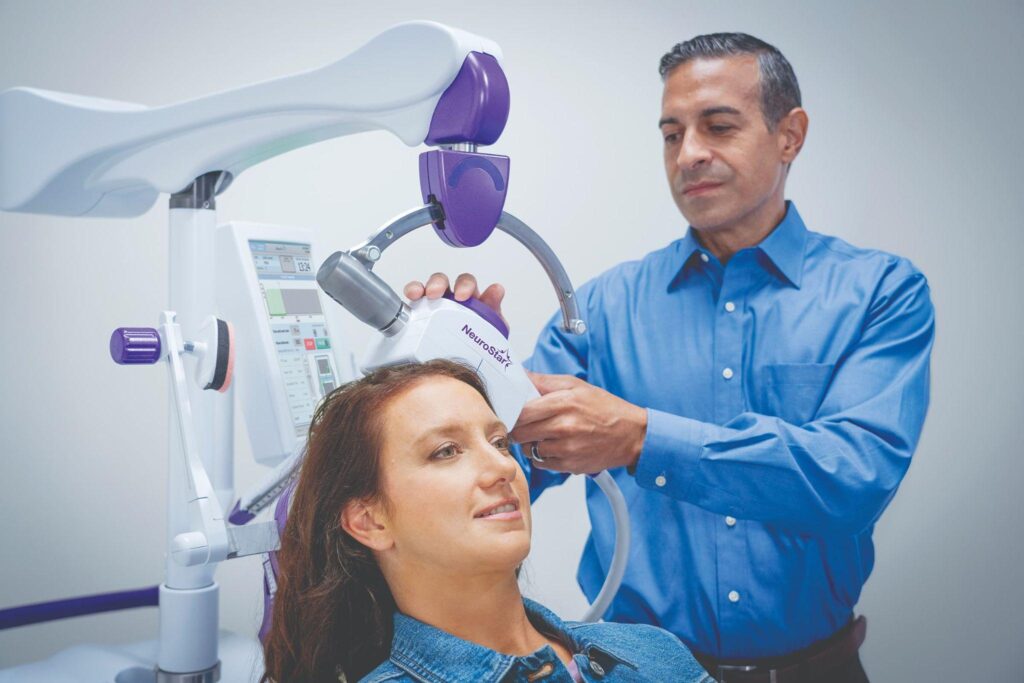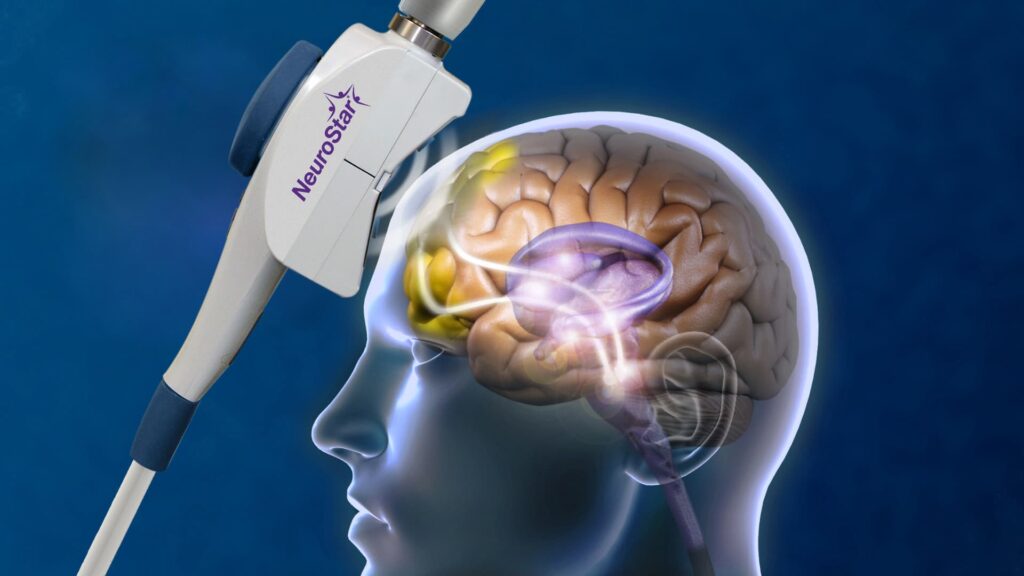
Transcranial magnetic stimulation (TMS) provides noninvasive care for individuals living with conditions like treatment-resistant depression. Delivered in an outpatient clinical setting, the therapy uses focused magnetic pulses to stimulate specific neural pathways without surgery or anesthesia.
Before booking, check whether the center offers a psychiatric evaluation, safety screening, and a treatment plan based on your needs. Ask about session details, possible side effects, and insurance coverage, too. Get the key facts before making an appointment. Keep reading to see what you should check when choosing a TMS provider.
Key Takeaways
- Choose qualified care: Look for psychiatric oversight and FDA-cleared TMS equipment.
- Know the schedule: TMS usually requires repeated outpatient sessions.
- Check safety and coverage: Ask about eligibility, side effects, insurance, and costs.
What Should You Look for in a TMS Therapy Center?
A TMS center should provide qualified psychiatric oversight, appropriate equipment, safety screening, and a treatment plan based on your clinical needs.
Proximity to your home or workplace also makes a rigorous schedule easier to maintain. Standard rTMS protocols typically require weekday visits over several consecutive weeks. The National Institute of Mental Health says a typical course uses treatment 5 days per week for 4 to 6 weeks, although the schedule can vary by protocol.
So, distance matters. But clinical care matters too.
Before scheduling, check these points:
- Psychiatric evaluation
- Device and protocol
- Safety screening
- Treatment schedule
- Progress monitoring
- Insurance support
The device also matters because FDA-cleared indications can differ by system and protocol. A center should tell you which device it uses and explain the indication that applies to the proposed treatment.
Does the Center Have Psychiatric Oversight?
A TMS program should include psychiatric oversight because treatment needs to fit within the broader plan for your mental health care.
The clinical team may review your treatment history, current medications, medical history, seizure history, and implanted devices. The clinician should also explain why TMS is being considered and what other treatment options remain available.
At FitMind Therapeutics, Sarah Boaz, MD, is identified as the supervising psychiatrist. The Jacksonville practice provides psychiatric care and uses NeuroStar Advanced TMS Therapy.
The focus should stay on appropriate medical evaluation, not on whether a clinic has the shortest treatment schedule.
How Do You Find a TMS Treatment Center?
You can identify qualified TMS providers through established psychiatric practices, hospital networks, neuromodulation clinics, or device manufacturer directories.
Start with centers that clearly state which TMS device they use and which conditions they treat. Then check whether the clinic provides the evaluation and follow-up care needed for the full treatment course.
You should also confirm that the center currently offers TMS rather than only general psychiatric services. FitMind Therapeutics, for example, is based in Jacksonville, FL, and provides NeuroStar Advanced TMS Therapy alongside psychiatric evaluation.
Key Factors to Evaluate When Comparing TMS Providers
Compare centers using the same medical and practical questions.
| What to compare | What to ask |
| Clinical oversight | Who evaluates the patient? |
| TMS device | Which system is used? |
| FDA-cleared indication | Does the indication match the treatment? |
| Safety | What screening is completed? |
| Schedule | How often are sessions required? |
| Insurance | Does the clinic help with authorization? |
| Follow-up | Who monitors treatment progress? |
And don’t rely on distance alone. A clinic should be able to explain the proposed treatment in clear terms.
What Happens at a TMS Clinic?

A TMS program usually begins with an evaluation and safety screening before treatment starts.
The clinician reviews your psychiatric history, previous treatments, current medications, medical conditions, and relevant safety concerns. The team may also use symptom questionnaires to establish a baseline.
Next, the clinician may measure the motor threshold. This helps determine the stimulation level used during treatment.
During a session, you remain awake in a chair while an electromagnetic coil is positioned against your scalp. The magnetic pulses stimulate a targeted area of the brain. NIMH reports that a typical rTMS session lasts about 3 to 40 minutes, depending on the protocol.
“A typical rTMS session usually lasts anywhere from 3 to 40 minutes.” – National Institute of Mental Health (NIMH)
No general anesthesia is required.
That can make the treatment process different from electroconvulsive therapy, although the two treatments are not interchangeable.
How Long Does a TMS Session Take?
A standard rTMS session can last about 3 to 40 minutes, while other protocols may use different session lengths.
| TMS approach | Typical pattern |
| Standard rTMS | Repeated magnetic pulses |
| Theta-burst | Patterned magnetic stimulation |
| Deep TMS | Specialized coil design |
| Accelerated TMS | Multiple sessions in one day |
NIMH notes that accelerated rTMS can use multiple sessions on the same day, while standard treatment commonly uses weekday sessions.
The treating clinician should choose the protocol based on the FDA-cleared indication, device, clinical history, and safety considerations.
How Does TMS Compare With Other Treatment Options?

TMS uses magnetic stimulation rather than medication to affect activity in targeted brain regions. TMS therapy for depression is one treatment approach used when depression has not improved enough with standard care.
Medication works through pharmacological effects in the body. Psychotherapy uses structured psychological approaches. TMS uses electromagnetic pulses delivered through a coil placed against the scalp.
You may receive TMS alongside medication or psychotherapy when your clinician considers that approach appropriate. NIMH notes that brain stimulation treatments may be used with other forms of care.
So, TMS does not automatically mean that other treatment must stop.
Never change or stop prescribed medication without speaking with the prescribing clinician.
Who May Be a Candidate for TMS Treatment?
TMS may be considered for certain psychiatric conditions when a qualified clinician determines that the treatment is appropriate.
The FDA cleared TMS for major depression in 2008. In 2018, the FDA cleared a deep TMS protocol for OCD in adults.
That history matters because not every use of TMS has the same regulatory status.
Research also continues for other conditions. A research use should not be described as an FDA-cleared indication unless the specific device and protocol have that clearance.
Does TMS Help Conditions Other Than Depression?
TMS has FDA-cleared indications beyond major depressive disorder, but the exact indication depends on the device and protocol. For example, TMS therapy for OCD is an FDA-cleared adjunctive treatment for adults with obsessive-compulsive disorder.
Some TMS applications remain under research. This includes certain uses involving PTSD and other psychiatric or neurological conditions. Your clinician should explain whether the proposed treatment has an FDA-cleared indication or is being considered in another clinical or research setting.
What Should You Know About TMS Safety?

TMS requires safety screening because the treatment produces a strong magnetic field.
Your clinician should ask about implanted medical devices, metallic objects, neurological conditions, seizure history, and other medical factors that could affect treatment safety. FDA guidance identifies several implanted devices and conditions that require specific precautions or may prevent treatment with certain rTMS systems.
Common side effects can include scalp discomfort, headache, tingling, facial muscle twitching, and lightheadedness. Mayo Clinic describes these effects as generally mild to moderate.
“Side effects are generally mild to moderate and improve shortly after a session.” – Mayo Clinic, Transcranial Magnetic Stimulation
Rare but serious adverse effects can include seizures and mania. Hearing protection is also used during treatment.
Tell the treatment team about implanted devices and neurological conditions before treatment begins.
How Much Does TMS Therapy Cost and Does Insurance Help?
TMS treatment costs vary by location, insurance coverage, diagnosis, device, number of sessions, and authorization requirements.
So, a single national price would not give you a reliable estimate.
Before treatment, ask the clinic for a cost estimate based on your insurance plan. Check whether the estimate includes the psychiatric evaluation, treatment sessions, follow-up visits, and any other clinical services.
Insurance requirements can also vary. Ask whether the clinic helps with prior authorization and whether your plan has specific requirements before TMS coverage begins.
FitMind Therapeutics can review insurance information and discuss coverage with patients as part of the intake process.
What Can You Expect From TMS Treatment Results?

While clinical data demonstrates notable response and remission rates for individuals with treatment-resistant symptoms, patient outcomes naturally vary. Reputable clinics do not promise universal results; instead, your clinical team tracks your progress week over week using objective psychiatric assessments to tailor ongoing care.
Is a TMS Therapy Center Worth Discussing?
If you’re dealing with ongoing symptoms and wondering whether TMS could be an option, the first step is understanding whether it fits your diagnosis and treatment history. You shouldn’t have to guess. A clinical evaluation can help clarify whether TMS is appropriate for your situation and which FDA-cleared indication applies.
FitMind Therapeutics offers NeuroStar Advanced TMS Therapy along with psychiatric evaluation services. A consultation gives you a chance to ask about the evaluation process, treatment options, and insurance coverage before making a decision. If you’re considering TMS, contacting FitMind Therapeutics can be a simple next step to discuss your options with a treatment team.
If depression symptoms include thoughts of suicide or immediate danger, call or text 988 in the United States to reach the Suicide & Crisis Lifeline, or seek emergency medical care.
FAQs
How close does a TMS therapy center near me need to be?
Because standard rTMS requires frequent weekday visits over 4 to 6 weeks, choosing a clinic within manageable driving or transit distance helps prevent missed sessions and supports treatment consistency.
Can You Drive Yourself Home After TMS?
Many patients can drive after TMS because treatment is performed while the patient remains awake and does not require general anesthesia.
Your treating clinician should provide specific guidance based on the treatment and your response to the session. NIMH describes rTMS as a procedure that does not require anesthesia.
Is TMS Available Without Taking Antidepressants?
TMS is a noninvasive brain-stimulation treatment, but it should not be used as a reason to stop prescribed antidepressants without medical guidance.
Your prescribing clinician should make any medication changes. TMS may be used as part of a broader treatment plan that includes medication or psychotherapy.
Can TMS Help Anxiety, PTSD, or Bipolar Depression?
TMS has specific FDA-cleared indications, while some uses for PTSD and bipolar depression remain outside established device indications or are still being studied.
Your clinician should explain the regulatory status of the proposed treatment before care begins.
What Should You Bring to a TMS Consultation?
Bring your current medication list, treatment history, relevant medical information, insurance details, and questions about TMS.
A complete treatment history helps the clinician review previous care and decide whether TMS should be considered.
References
- https://www.nimh.nih.gov/health/topics/brain-stimulation-therapies/brain-stimulation-therapies
- https://www.mayoclinic.org/tests-procedures/transcranial-magnetic-stimulation/about/pac-20384625